

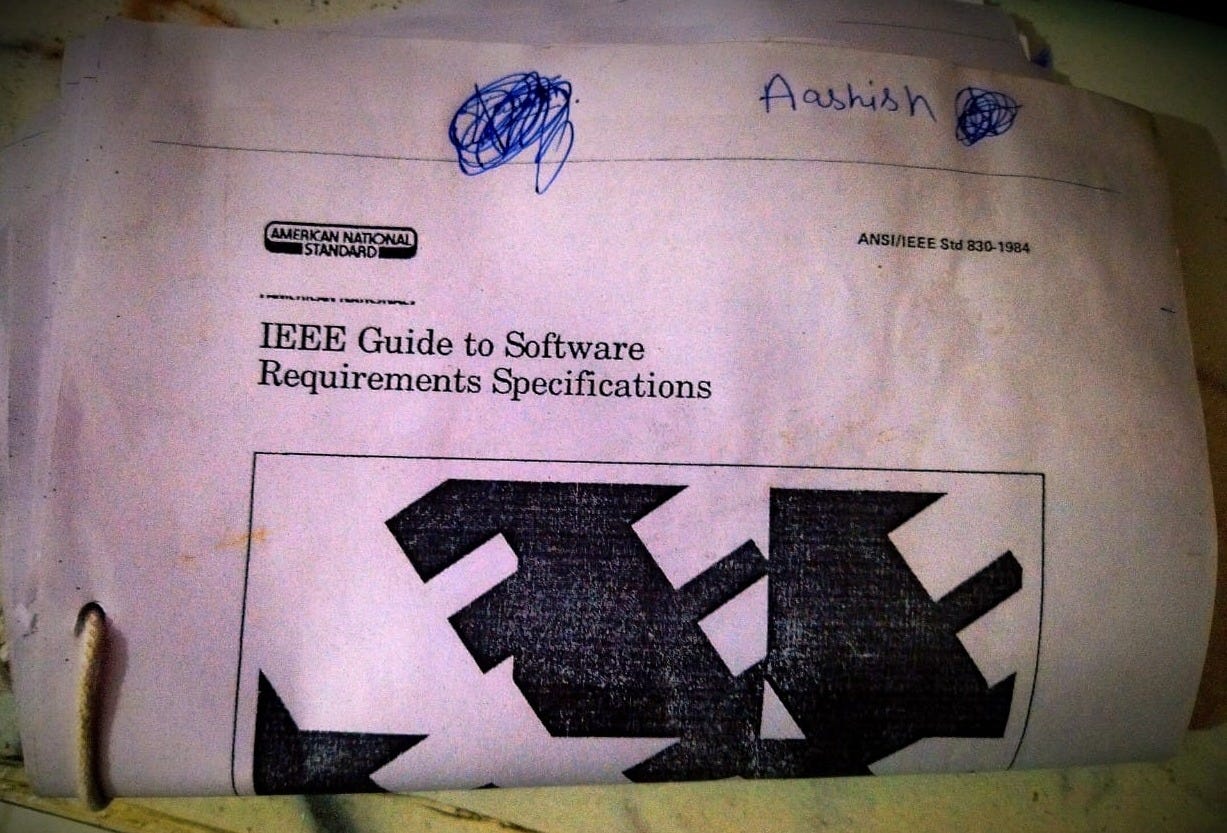
I’m writing this one sober. Chicken-Rice-Beer. Pardon my grammar!!
The latest IEEE Guide to Software Requirements Specification is locked behind a paywall, my university isn’t rich enough to provide it for me. And I’m a poor person who can just afford OTT subscriptions.
The one I read was written and approved in 1983, about 43 years from 2026. I read about 85%, and I got bored. I’ll share what I learned from 24 pages, with font size below 10 points.
Although writing SRS is a Business Analyst’s (BA) job, in small startup teams, it is usually written by software engineers. Sometime, SRS just doesn’t exist.
For personal projects, we usually just convert our idea to code directly without ever needing an SRS.
Why do we need an SRS?
A simple answer would be, to just do enough. Not more, not less. JUST ENOUGH.
This document helps product manager/team lead or anyone in authority to track their progress.
SRS also feeds to SLA (Service Level Agreement) which is signed between the client and the service provider (your company). SRS and SLA aren’t the same, but non-functional requirements (like response time or availability goals) in SRS often becomes the measurable metrics into the SLA contract.
It can turn out a useful piece in our personal projects as well.
I tried writing an SRS for my Dental Clinic ERP System (still in development). I delayed (procrastinated) to start this project. I was testing everything from the IEEE’s guide. Here are some pictures.
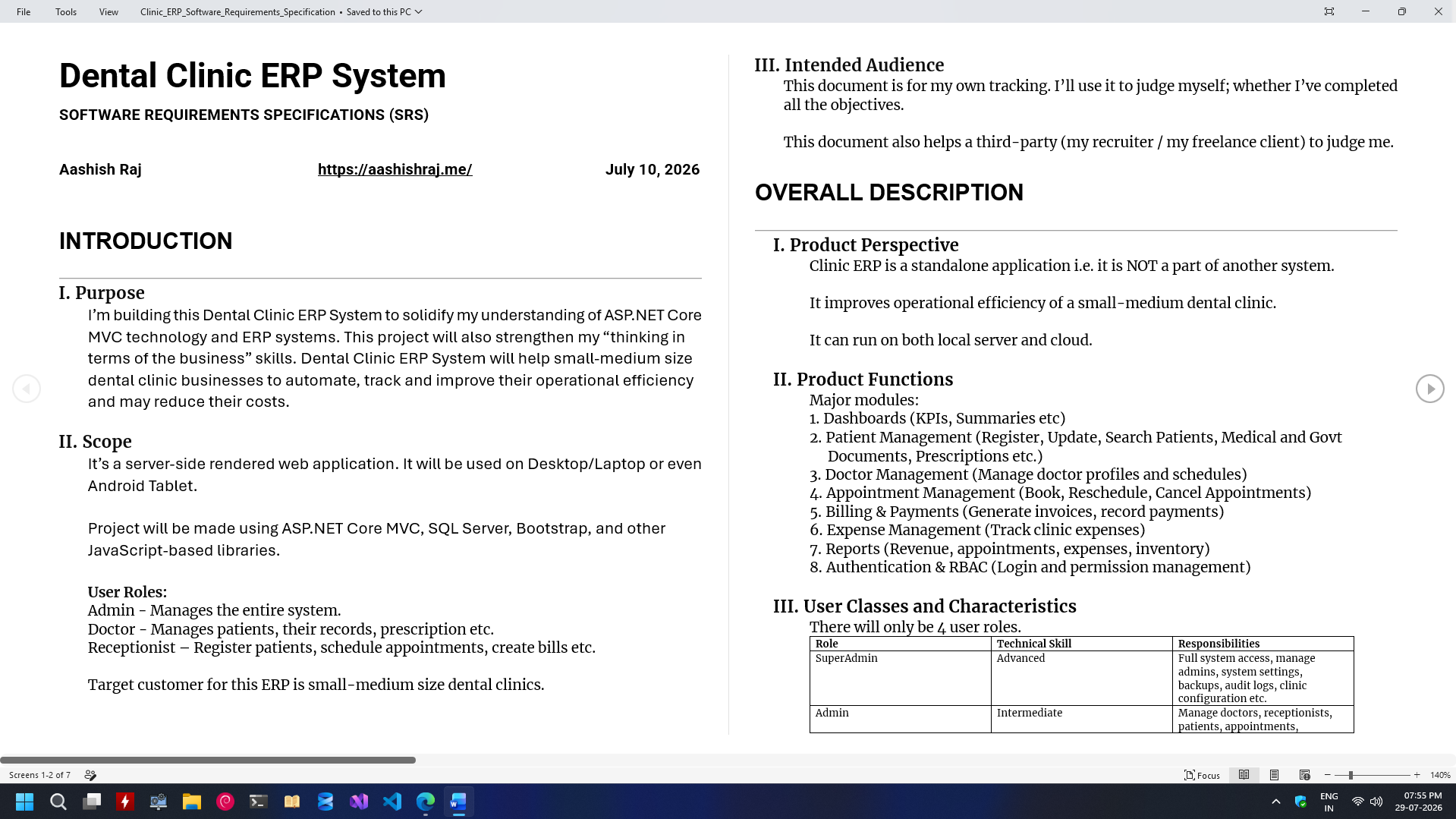
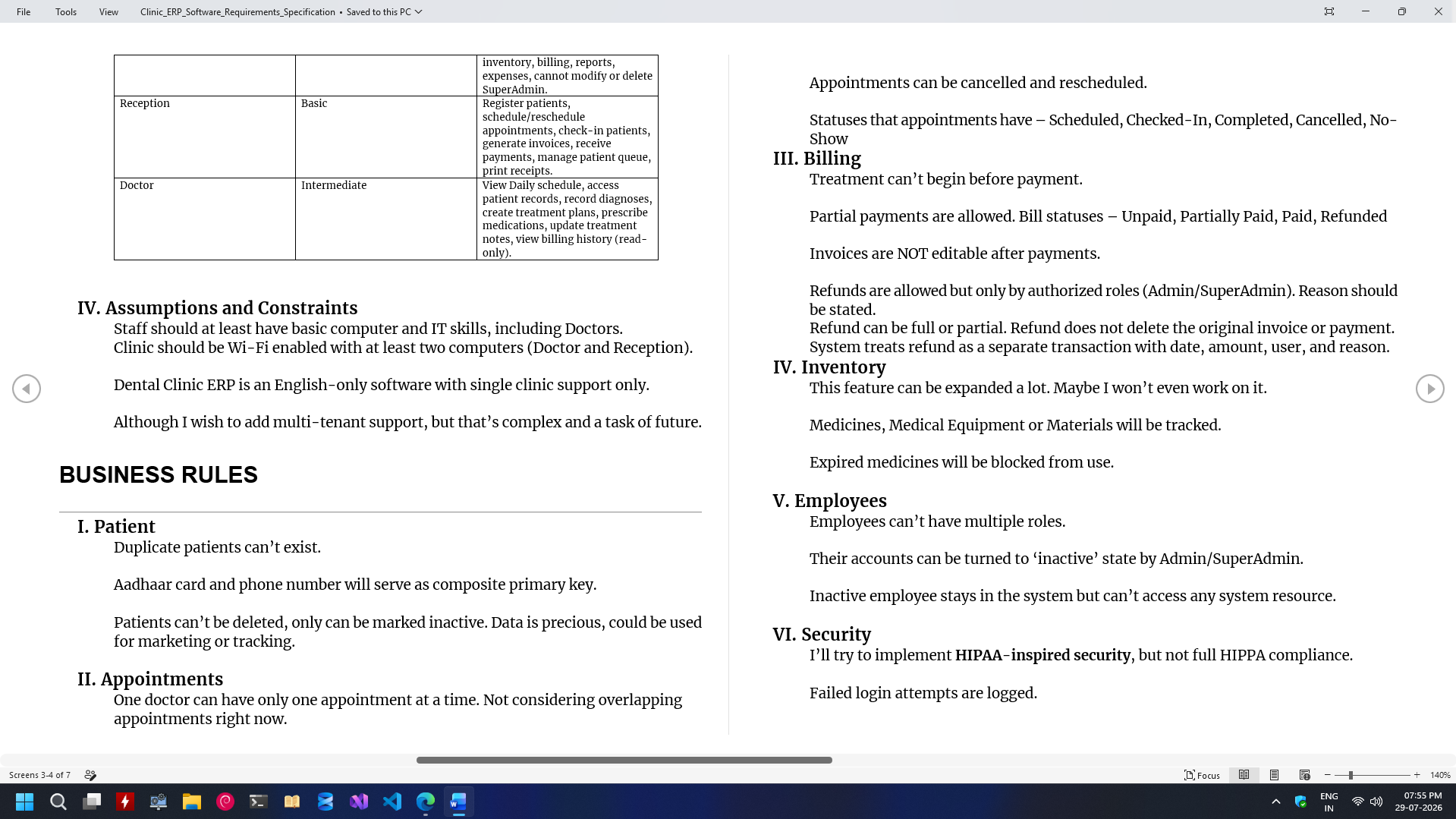
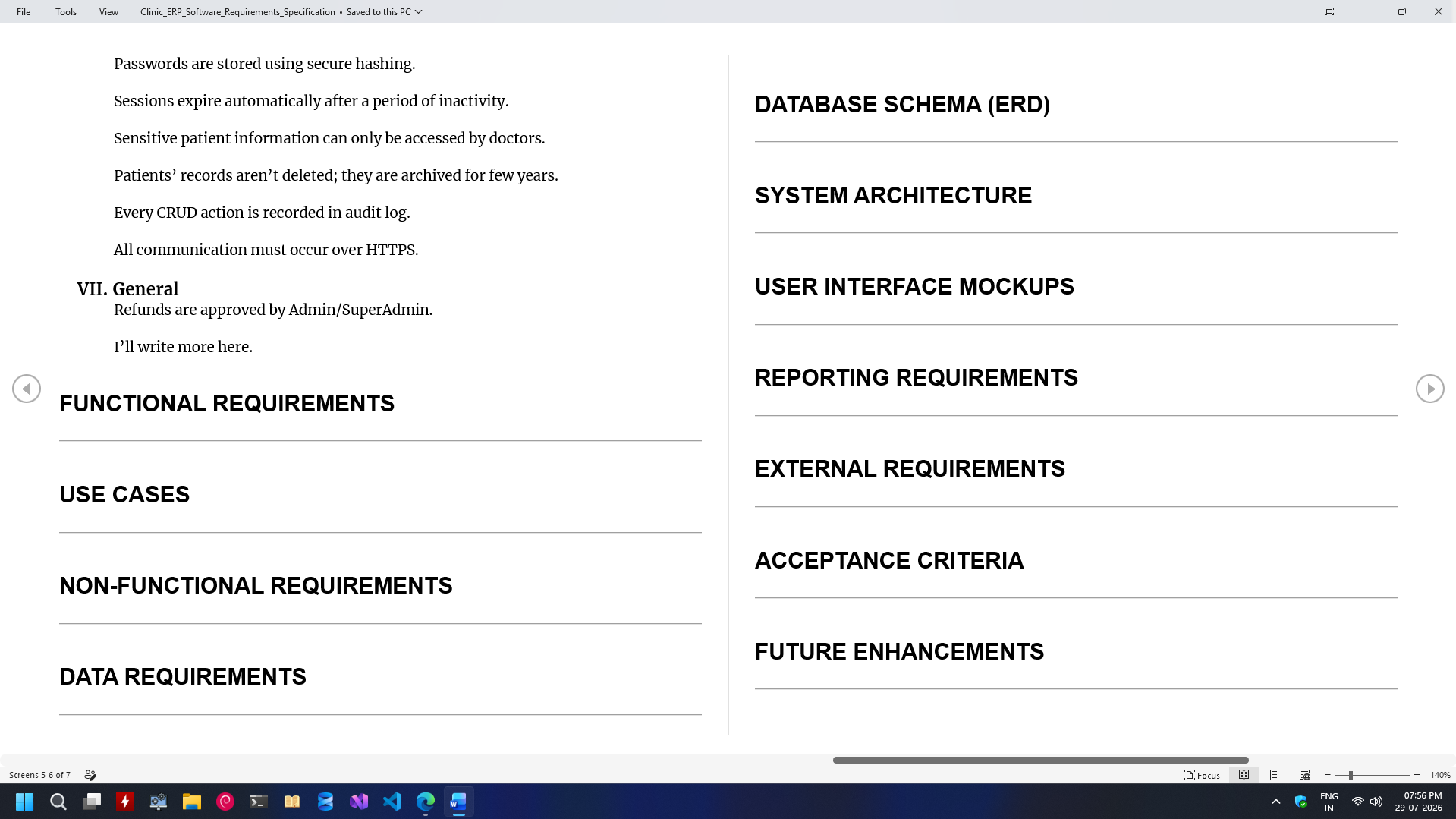
All of the requirements came from my imagination. I was also to visit a clinic and see how they operate in real. I didn’t, reason. Anyways.
Writing this document was taking time and effort, also with low dopamine and low motivation in early July it became super hard. Hence, I scrap the project in between and this SRS has claimed few megabytes of my free OneDrive account for 15 days.
Now, I’m fully motivated to start over this project once more. But I don’t want to use this document. I’m an engineer, my job is to build. Writing just takes so much time, project is significantly small, less than 15,000 lines of code, so writing 20-30 pages and spending a week on it isn’t worth the effort.
I’ve rarely worked on full software solutions for freelance clients. I’ve added functionality to already existing software (My Services). Hence, I haven’t made any SRS for my clients. Once I start serving international clients, I think I’ll have to.
But I still want to write something to track my progress. In the Pragmatic Programmer Book (my reading list), as I remember, author talked about the power of using .md (markdown files) just for everything.
In fact, my portfolio, which is made with Mintilfy {was suggested to me by Mrinal Wahal (his portfolio) and I copied his theme, to act clever, instead of forking his repo and giving him credit, I cloned it, deleted .git folder and made it my own :-) } renders markdown.
We could, in fact many do (but not in a good way), use markdown for Software Requirement Specification.
Markdown Files for SRS (The Lazy Way)
My idea is to be as loose as possible. Structuring kills imagination. However, in organization or freelance, a standard SRS keeps both client and you happy.
I would describe my imagination in long sentences. Answering these questions (they can be loose as well).
What is the purpose of the application?
How and whom is it helping?
How will the Graphical User Interface look? Mock-ups made by pen on paper?
How are people interacting in real life to get the job done? Who are the USERS inside the software?
Responsibility of USERS, Exceptions, Compliance etc.
Things to not write in an SRS
Tech Stack, Deployment Strategies
Team Size, People responsible
Project’s Duration, Budget, Staffing
Any would be, could be, should have been etc. (BE PRECISE ABOUT YOUR NEEDS)
There is more, but I’m being lazy. My tummy is full of chicken-rice with beer and I want to sleep.
Don’t forget to VERSION and TAG your Requirements.md with Git, as it can change with time.
Using an SRS even for personal projects can be incredibly useful. Your imagination will go on steroids. 💉💊
That’s it.
Aashish.
Interesting Read, don't know who I can send it to 🤔, but great article 😄